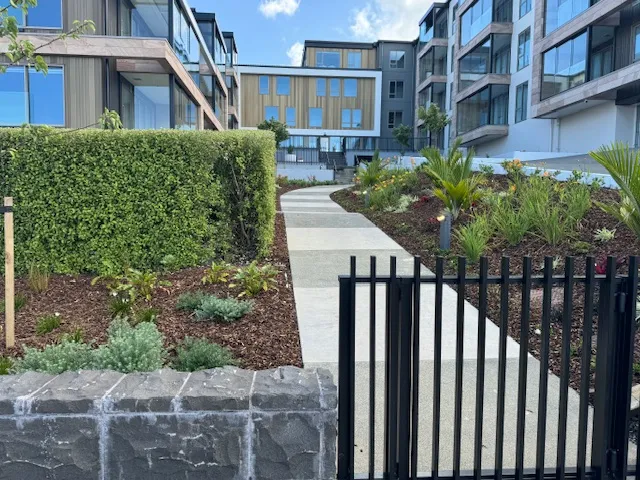
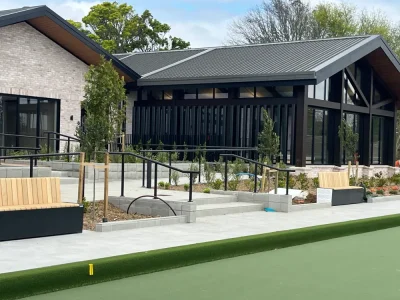
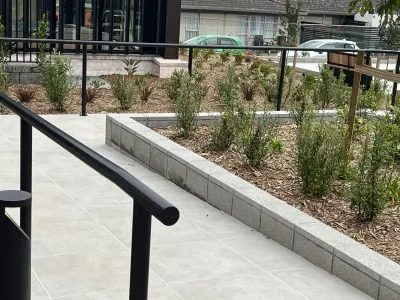
We coordinate kerbs, channels and drainage with paving, roads and buildings to ensure levels, water flow and finishes work together on live projects.
Kerbs, channels and drainage sit at the most sensitive points of any site.
They define how water moves, how people access spaces, and how finished surfaces meet.
When these elements are treated in isolation, misalignment shows up immediately — in trip hazards, pooling water, poor finishes, and rework.
We manage this work by focusing on accuracy, sequencing and coordination across the whole external environment.
If the line or level is wrong at this stage, the surrounding pavements, footpaths, and accessways never sit correctly.
We construct kerbs and channels in public and commercial environments with direct regard for adjacent paving, road surfaces, and pedestrian movement, ensuring edges align cleanly and finished surfaces perform once opened to use.
Issues typically arise when drainage elements are installed without coordination with paving levels, falls, or access routes.
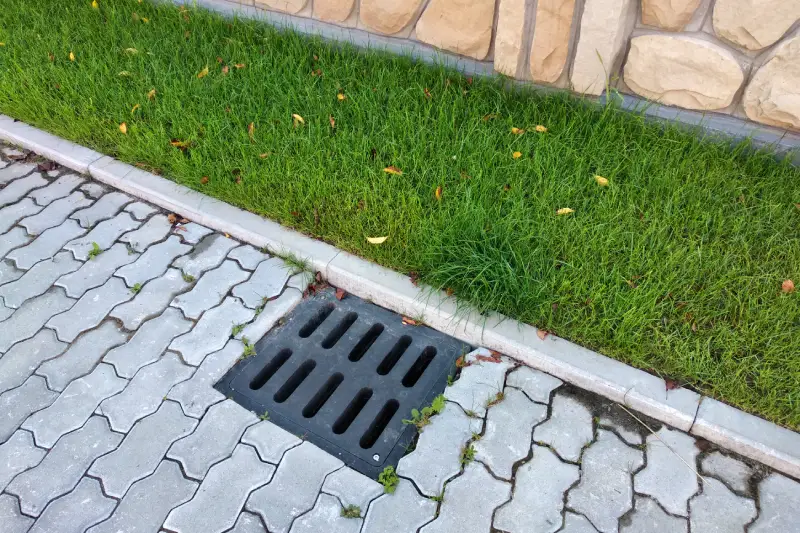
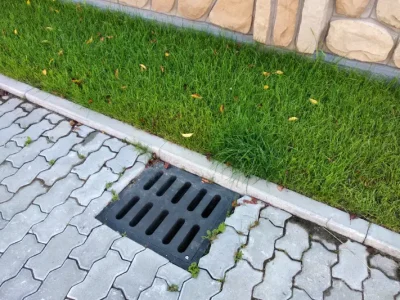
We construct and coordinate drainage interfaces across footpaths, plazas, accessways, and shared spaces, focusing on correct placement and surface alignment so water flows as intended within the approved design.
We do not design stormwater systems — we build and integrate the approved details correctly on site.
These areas affect accessibility, drainage performance, and long-term durability under public use.
We form thresholds and edge conditions between buildings, pavements, roads, and landscaped areas with close control of levels and tolerances, so transitions are accessible, visually clean, and hold up once the site is operational.
If sequencing is wrong, it can lead to temporary flooding, access disruption, or rework once finishes are in place.
We carry out stormwater tie-ins in coordination with other site activities, staging the work so connections are made cleanly without compromising surrounding finishes or site operations.
We coordinate this work with paving, concrete, and other external elements so levels align, completed areas are protected, and staged or occupied sites remain functional throughout delivery.
This work is planned as part of the overall external works package — not introduced late or treated as a standalone task.v
Our focus is on making sure these elements work once the site is live, not just when construction finishes.
This is not civil engineering design.
This is construction and coordination focused on getting the interfaces right.
Public realm and civic projects
Retail precincts and access-heavy environments
Commercial and mixed-use developments
Sites where finish quality, drainage alignment and public access matter